制作锁

编写分布式锁的注意点

  1. 注意锁的可重试、可续期、以及加锁和释放锁的一致
  2. 如果连接不上redis如何处理?如果线程抢占锁失败如何处理?

加锁业务逻辑

  1. 包含业务要求的重试、以及redis连接不上、线程抢占锁失败的处理
1
2
3
4
5
6
7
8
9
10
11
12
13
14
15
16
17
18
19
20
21
22
23
24
25
26
27
28
29
30
31
32
33
34
35
36
37
38
39
40
41
42
43
44
45
46
47
48
public static <T, R> R runWithLock(Function<T, R> function, T req, Class<? extends AssuranceSyncHandler<T,R>> clazz,
int expiredSec, String... factors) {
AssuranceSyncHandler<T, R> zedSynchronizedHandler = getSyncHandlerFromClazz(clazz);
ZedBody zedBody = buildBody(req, expiredSec, factors);
// 尝试加锁
boolean lockSuc = tryLock(zedBody, zedSynchronizedHandler);
// 如果没加锁成功,则按照配置策略进行重试
if (!lockSuc && !retryLock(zedBody, zedSynchronizedHandler)) {
LOGGER.info("thread can not get lock, retry times is {}", zedSynchronizedHandler.getRetryTimes());
// 如果缓存不可用,则直接执行业务逻辑
if (SmartZedThreadLocal.isSynchronizedLockInvalid()) {
LOGGER.error("lock failed because of the system error, so func apply directly");
SmartZedThreadLocal.clear(zedBody.getRowKey());
return function.apply(req);
}
// 如果缓存可用,则执行自定义锁策略
return zedSynchronizedHandler.strategyWhenSync(req);
}

R result;
try {
result = function.apply(req);
} catch (Exception ex) {
LOGGER.error("AssuranceLockUtils.runWithLock error when apply func", ex);
throw ex;
} finally {
tryUnLock(zedBody);
}
return result;
}

@SuppressWarnings("unchecked")
private static <T, R> AssuranceSyncHandler<T, R> getSyncHandlerFromClazz(Class<? extends AssuranceSyncHandler<T,R>> clazz) {
return Optional.ofNullable(clazz)
.map(ApplicationContextUtil::getBean)
// 此处加map是为了把子类转成父类
.map(e -> (AssuranceSyncHandler<T, R>)e)
.orElse((AssuranceSyncHandler<T, R>)defaultHandler);
}

private static boolean retryLock(ZedBody zedBody, AssuranceSyncHandler<?,?> handler) {
int retryTimes = 0;
boolean lockSuc = false;
while(!lockSuc && handler.getRetryTimes() > retryTimes++) {
lockSuc = tryLock(zedBody, handler);
}
return lockSuc;
}

内部锁加锁逻辑

  1. 内部锁的粒度要控制,以及如果两个锁释放失败如何处理
  2. 感觉也没必要加内部锁,因为如果并发度不高的话,每次都会获取到redis锁,再加上内部锁。反而降低了性能。如果单机并发很高,可以考虑加内部锁
1
2
3
4
5
6
7
8
9
10
11
12
13
14
15
16
17
18
19
20
21
22
23
24
25
26
27
28
29
30
31
32
33
34
35
36
37
38
39
40
41
42
43
44
 private static boolean tryLock(ZedBody zedBody, AssuranceSyncHandler<?,?> zedSynchronizedHandler) {
boolean ans = false;
boolean innerTryLock = false;
try {
innerTryLock = LocalLockHolder.tryLock(zedBody.getRowKey(), zedSynchronizedHandler.getRetryInterval());
if (innerTryLock) {
ans = assuranceSyncService.lock(zedBody);
}
} catch (Throwable e) {
LOGGER.error("AssuranceLockUtils.runWithLock error", e);
} finally {
// 如果外部锁没加成功,则释放内部锁
if (!ans && innerTryLock) {
LocalLockHolder.unlock(zedBody.getRowKey());
}
}
return ans;
}

private static void tryUnLock(ZedBody zedBody) {
try {
LocalLockHolder.unlock(zedBody.getRowKey());
assuranceSyncService.unLock(zedBody);
} catch (Throwable e) {
LOGGER.error("AssuranceLockUtils.runWithUnLock error", e);
}
}

private static class LocalLockHolder {
private static final Map<String, Lock> LOCK_MAP = new ConcurrentHashMap<>();

public static boolean tryLock(String key, long timeout) throws InterruptedException {
Lock lock = LOCK_MAP.computeIfAbsent(key, k -> new ReentrantLock());
return lock.tryLock(timeout, TimeUnit.MILLISECONDS);
}

public static void unlock(String key) {
Lock lock = LOCK_MAP.get(key);
if (lock != null) {
lock.unlock();
}
LOCK_MAP.remove(key);
}
}

核心加锁逻辑

  1. 包含锁的可重入处理
1
2
3
4
5
6
7
8
9
10
11
12
13
14
15
16
17
18
19
20
21
22
23
24
25
26
27
28
29
30
31
32
33
34
35
36
37
38
39
40
41
42
43
44
45
46
47
48
49
50
51
52
53
54
55
56
57
58
59
60
61
62
63
64
65
66
67
68
69
70
71
72
73
74
75
76
77
78
79
80
81
82
83
84
85
86
87
88
89
90
91
92
93
public Boolean lock(ZedBody zedBody) {
// 1. 竞争锁
boolean suc = syncService.set(zedBody.getRowKey(), getValue(), zedBody.getTimeout(), () -> {
// 如果redis没有连接上,则不加锁
SmartZedThreadLocal.markSynchronizedLockInvalid(true);
return null;
});
if (suc || isOwnLock(zedBody)) {
// 增加引用次数
int count = increaseCount(zedBody.getRowKey());
LOGGER.info("lock suc key:{},threadId:{}, count {}", zedBody.getRowKey(), Thread.currentThread().getId(), count);
return true;
}
return false;
}

@Override
public Boolean unLock(ZedBody zedBody) {
int lockCount = threadLocal.get().getByKeyWithDefault(zedBody.getRowKey()).count.get();
LOGGER.info("un lock start key:{},threadId:{},count:{}", zedBody.getRowKey(),
Thread.currentThread().getId(), lockCount);
// 1. 如果引用计数已经小于0,则失效缓存
if (decreaseCount(zedBody.getRowKey()) <= 0) {
return syncService.del(zedBody.getRowKey());
}
return true;
}

private int increaseCount(String key) {
LockCounterHolder counterHolder = threadLocal.get();
return counterHolder.increaseWithKey(key);
}

private int decreaseCount(String key) {
LockCounterHolder counterHolder = threadLocal.get();
return counterHolder.decreaseWithKey(key);
}

private boolean isOwnLock(ZedBody zedBody) {
String s = syncService.get(zedBody.getRowKey());
return StringUtils.equals(s, getValue());
}

private String getValue() {
return LOCAL_HOSTNAME + ":" + Thread.currentThread().getId();
}

private static String getHostname() {
try {
return InetAddress.getLocalHost().getHostName();
} catch (UnknownHostException e) {
LOGGER.warn("Failed to get hostname", e);
return "[unknown]";
}
}

private static class LockCounterHolder {

private final Map<String, LockCounter> counters = new HashMap<>();

public LockCounter getByKeyWithDefault(String key) {
return counters.computeIfAbsent(key, e -> new LockCounter());
}

public int increaseWithKey(String key) {
LockCounter counter = getByKeyWithDefault(key);
return counter.count.incrementAndGet();
}

public int decreaseWithKey(String key) {
LockCounter counter = counters.get(key);
// 防止非持有锁的线程释放锁
if (counter == null) {
throw new ZedSynchronizedException("key is not found when release. key=" + key);
}
int count = counter.count.decrementAndGet();

if (count <= 0) {
//如果count 小于0,删除key,避免内存泄漏
counters.remove(key);
}
return count;
}
}

private static class LockCounter {

private final AtomicInteger count;

public LockCounter() {
this.count = new AtomicInteger(0);
}
}

Redis连接逻辑

  1. 包含redis连接不上的重试
1
2
3
4
5
6
7
8
9
10
11
12
13
14
15
16
17
18
public boolean set(String key, String value, int expireTimeSec) {
int connectTime = 0;
String v = null;
SetParams setParams = new SetParams().nx().ex(expireTimeSec);
while (Objects.isNull(v)) {
try (Jedis jedis = jedisPool.getResource()) {
v = jedis.set(PREFIX + key, value, setParams);
return StringUtils.equals(SUCCESS, v);
} catch (Exception e) {
LOGGER.error("rdb3 setNx error key:{} value:{}", key, value, e);
if (connectTime++ >= RECONNECT_TIMES) {
LOGGER.error("rdb3 retry {} times setNx error key:{} value:{}", RECONNECT_TIMES, key, value, e);
throw e;
}
}
}
return StringUtils.equals(SUCCESS, v);
}

测试锁

基于上面的分布式锁,当我想在单机上通过UT来保证锁的正确性,该如何写UT呢?

第一版

我写的第一版测试代码如下:

1
2
3
4
5
6
7
8
9
10
11
12
13
14
15
16
17
18
19
20
21
22
23
@Test
public void testLockSync() throws InterruptedException {
// 1. 第一个线程抢占到锁,睡眠
new Thread(() -> {
String res = AssuranceLockUtils.runWithLock((req) -> {
try {
Thread.sleep(1000);
} catch (InterruptedException e) {
e.printStackTrace();
}
return "test";
}, null, 10, "test");
Assert.assertEqual("test", res);
}).start();
// 2. 第二个线程尝试抢占锁,应该失败
new Thread(() -> {
try {
AssuranceLockUtils.runWithLock((req) -> "test", null, 10, "test");
} catch (Exception exception) {
Assert.assertTrue(exception instanceOf ZedSynchronizedException);
}
}).start();
}

眼尖的同学可能一眼就看出来了程序的问题,主线程无法感知到测试结果。如果要保证主线程感知到测试结果,有两个需要注意的点,第一就是需要把测试线程的值传递给主线程。第二个点就是要保证主线程比测试线程执行的晚。常见的方式有 CountDownLatchBlockQueue和共享内存等

第二版

所以我尝试写了第二版测试代码:

1
2
3
4
5
6
7
8
9
10
11
12
13
14
15
16
17
18
19
20
21
22
23
24
25
26
27
28
29
30
31
32
33
@Test
public void testLockSync() throws InterruptedException {
CountDownLatch latch = new CountDownLatch(2);
AtomicReference<String> firstThreadAns = new AtomicReference<>();
AtomicReference<Exception> secondThreadAns = new AtomicReference<>();
// 1. 第一个线程抢占到锁,睡眠
new Thread(() -> {
firstThreadAns.set(AssuranceLockUtils.runWithLock((req) -> {
try {
Thread.sleep(1000);
} catch (InterruptedException e) {
e.printStackTrace();
} finally {
latch.countDown();
}
return "test";
}, null, 10, "test"));
}).start();
// 2. 第二个线程尝试抢占锁,应该失败
new Thread(() -> {
try {
AssuranceLockUtils.runWithLock((req) -> "test", null, 10, "test");
} catch (Exception exception) {
secondThreadAns.set(exception);
} finally {
latch.countDown();
}
}).start();
// 3. 主线程check结果
latch.await();
Assert.assertEquals("test", firstThreadAns.get());
Assert.assertTrue(secondThreadAns.get() instanceof ZedSynchronizedException);
}

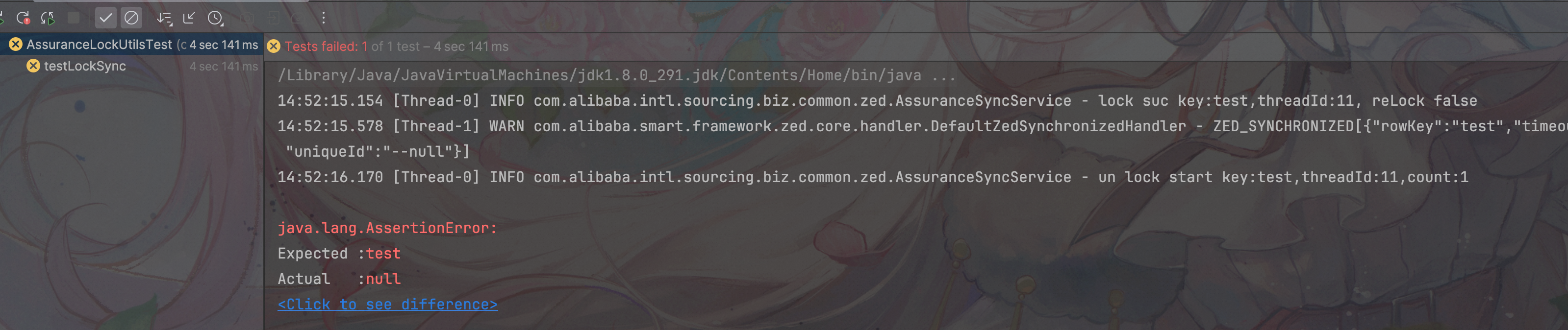
执行这个测试程序后,会有下面几个异常的case:

  1. 31行的断言失败,firstThreadAns.get() == null原因是因为14行,测试线程提前执行latch.countDown(),导致测试线程没有把测试结果传递给主线程,主线程就开始check结果
  2. 主线程一直等待,导致程序不能结束原因是因为第二个线程先执行,第一个线程没有获得到锁,抛出加锁失败异常,导致没有执行latch.countDown()方法,进行会导致主线程一直pending。解决方案很简单,就是保证第一个测试线程先于第二个测试线程执行。可以使用SemaphoreCountDownLatch和锁,但是这里要注意,不能用Thread.join()

第三版

1
2
3
4
5
6
7
8
9
10
11
12
13
14
15
16
17
18
19
20
21
22
23
24
25
26
27
28
29
30
31
32
33
34
35
@Test
public void testLockSync() throws InterruptedException {
CountDownLatch latch = new CountDownLatch(2);
Semaphore semaphore = new Semaphore(0);
AtomicReference<String> firstThreadAns = new AtomicReference<>();
AtomicReference<Exception> secondThreadAns = new AtomicReference<>();
// 1. 第一个线程抢占到锁,睡眠
new Thread(() -> {
firstThreadAns.set(AssuranceLockUtils.runWithLock((req) -> {
req.release();
try {
Thread.sleep(1000);
} catch (InterruptedException e) {
e.printStackTrace();
}
return "test";
}, semaphore, 10, "test"));
latch.countDown();
}).start();
// 2. 第二个线程尝试抢占锁,应该失败
new Thread(() -> {
try {
semaphore.acquire();
AssuranceLockUtils.runWithLock((req) -> "test", null, 10, "test");
} catch (Exception exception) {
secondThreadAns.set(exception);
} finally {
latch.countDown();
}
}).start();
// 3. 主线程check结果
latch.await();
Assert.assertEquals("test", firstThreadAns.get());
Assert.assertTrue(secondThreadAns.get() instanceof ZedSynchronizedException);
}

完美