
How Spring MVC Resolves @RequestBody Parameters
There are generally two ways to pass parameters through HTTP: parse them from the URL, or place them in the body. What we are discussing here is RequestBody, which parses the request body and maps it to our parameters. So how does it parse the body? That is the purpose of this article.
This is actually a processing mechanism inside Spring MVC. In the overall Spring MVC request flow, each mapped controller and method is proxied through HandlerMethod, and during the reflective invoke call on the method, Spring parses the request to obtain the arguments. @RequestBody plays its role during this parameter parsing process.
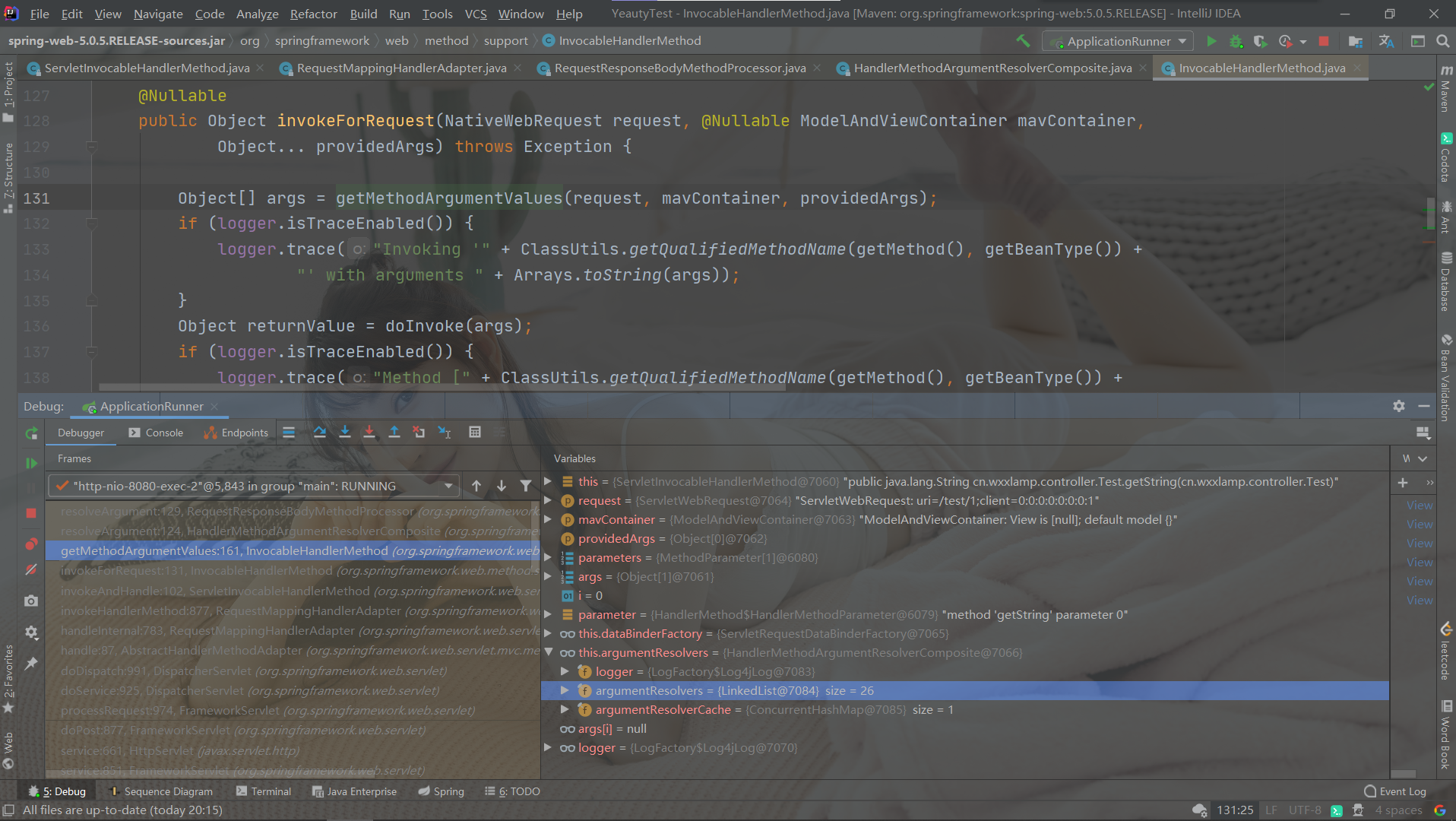
1. Execution Flow
In InvocableHandlerMethod#getMethodArgumentValues, it iterates over the parameters of the current HandlerMethod. For each parameter, it uses HandlerMethodArgumentResolverComposite#supportsParameter to determine whether the parameter can be resolved by a resolver. If it can, it uses HandlerMethodArgumentResolverComposite#resolveArguement to resolve it.
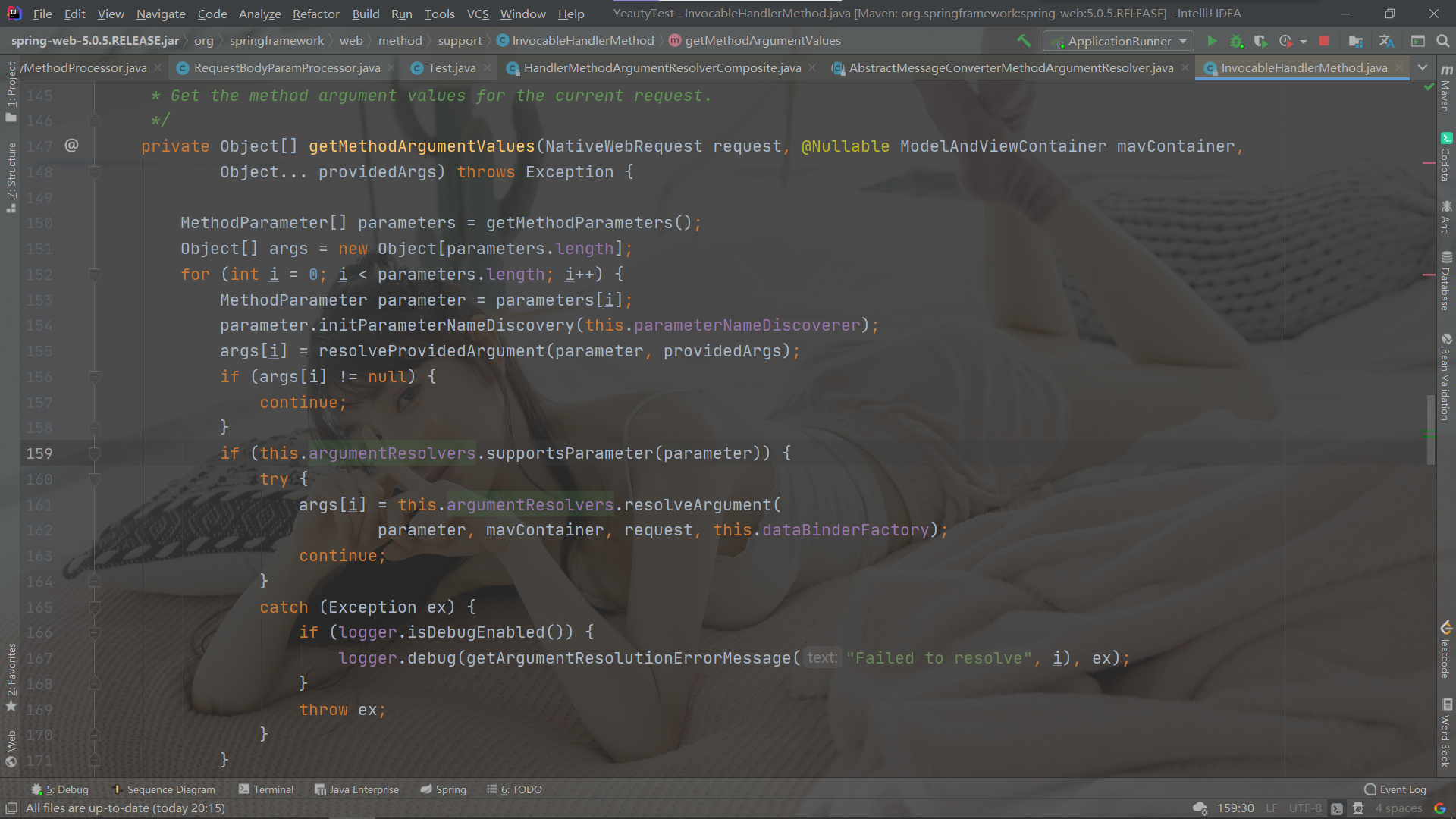
For @RequestBody, the corresponding resolver is RequestResponseBodyMethodProcessor. Let us go into its source code and take a closer look:
1 | public class RequestResponseBodyMethodProcessor extends AbstractMessageConverterMethodProcessor { |
2. Registration Flow
So how is RequestResponseBodyMethodProcessor registered into the resolver list? This mainly happens in RequestMappingHandlerAdapter:
RequestMappingHandlerAdapterimplements theHandlerAdapterinterface. This interface is the SPI of the MVC framework, andDispatcherServletuses it to access all installed handlers.
HandlerAdapteris mainly the adapter for routed methods. After routing,DispatcherServletusesHandlerAdapterto execute the real operation (handlerAdapterworks throughHandlerMethod).
For RequestResponseBodyMethodProcessor, it implements InitializingBean. After bean initialization, it adds parameter handlers and return value handlers. For the parameter handlers, the content is as follows:
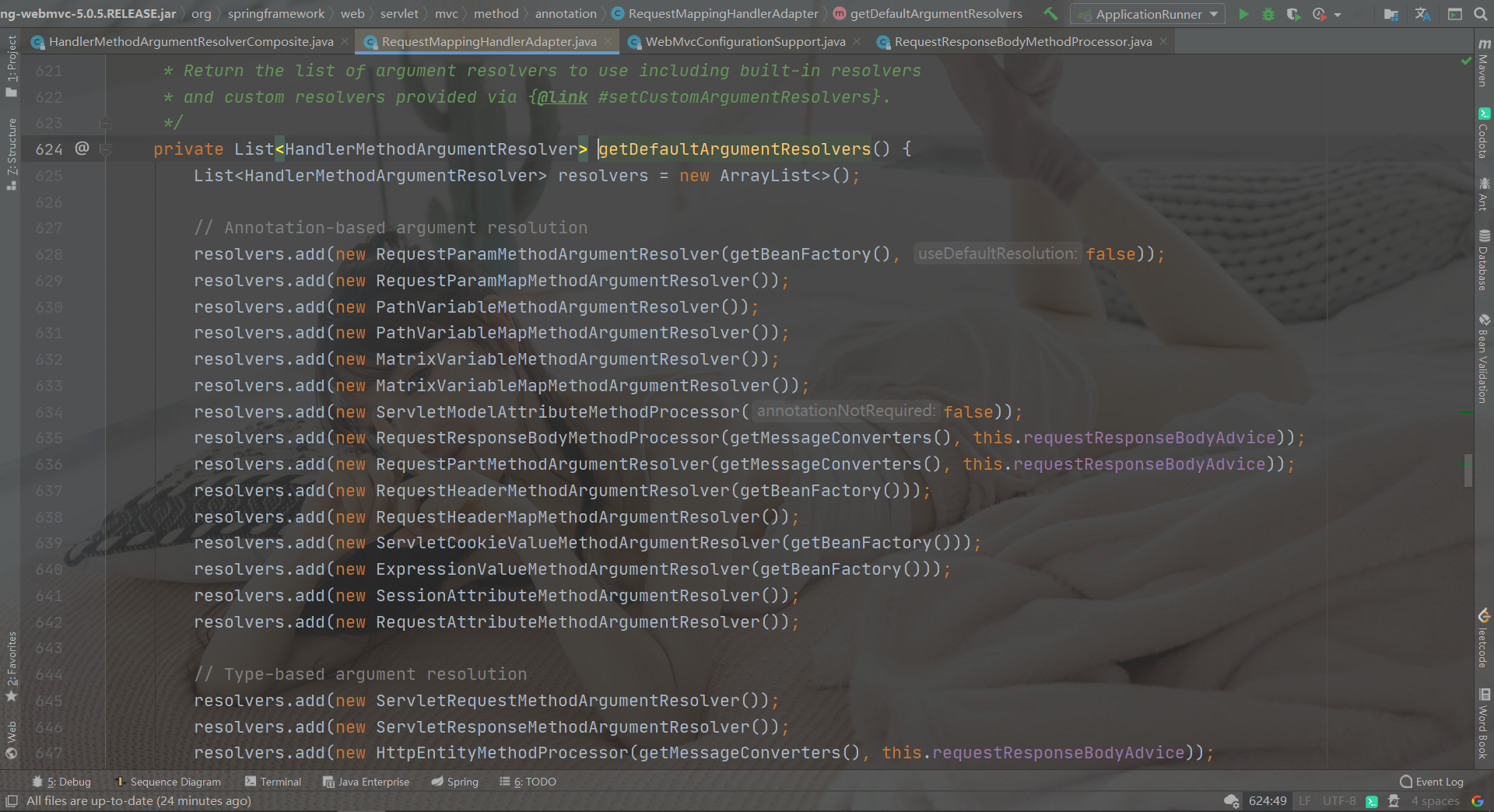
From the figure, we can see that RequestMappingHandlerAdapter loads the framework-provided and custom parameter resolvers into memory during initialization.
Suppose we want to customize a parameter resolver. When will the system load it into memory?
We find that RequestMappingHandlerAdapter#setCustomArgumentResolvers is the method used to set custom parameter resolvers, so we only need to find its caller.
We only need to implement WebMvcConfigurer (this relates to Spring’s auto-configuration, which I have not looked into yet, so I will leave it aside for now)
3. Design Advantages
Design Patterns
It uses the strategy pattern + factory pattern + composite pattern:
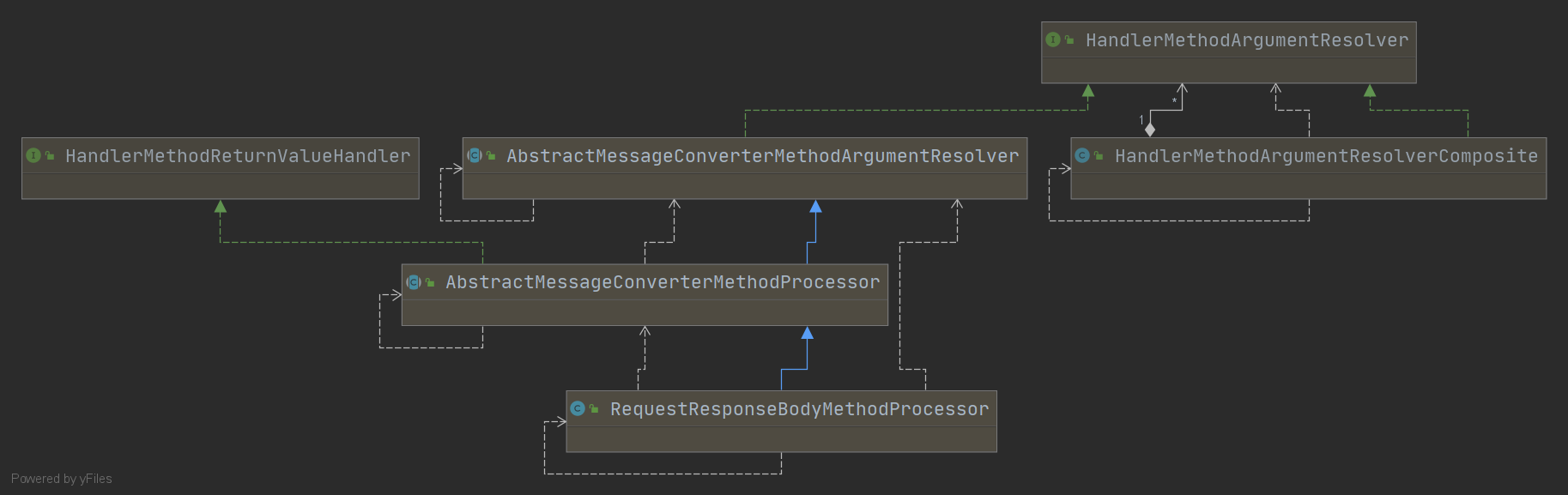
For parameter and return value handling in HandlerMethod, different handling strategies correspond to different types of processing, so the strategy pattern is used here. As for HandlerMethodArgumentResolverComposite, it corresponds to a strategy factory. At the same time, because this class implements HandlerMethodArgumentResolver, it is also a variant of the composite pattern, and the concrete strategy class is HandlerMethodArgumentResolver.
The class diagram is shown below:
Caching
In the parameter resolution factory, the resolvers are registered into a list when the application first starts. But if they are used later, they are stored in a map and can be retrieved directly (with MethodParameter as the key), improving routing efficiency.
Appendix: Common MVC Parameter Annotations
For URL parameter parsing, there are two annotations: pathVariable (a type of placeholder) and requestParam. For the body, there is requestBody. Even without annotations, the URL can also be directly converted into the corresponding parameter or entity class.
- @PathVariable: www.666.com/web/6
1 |
|
- @RequestParam: www.666.com/web?user=1
1 |
|
- @RequestBody: www.666.com/web the body contains JSON
1 |
|
- No annotation: www.666.com/web?userId=1&pwd=2
1 |
|